Leadership that connects: In conversation with Sara Körner and Alexandra Sonnleitner
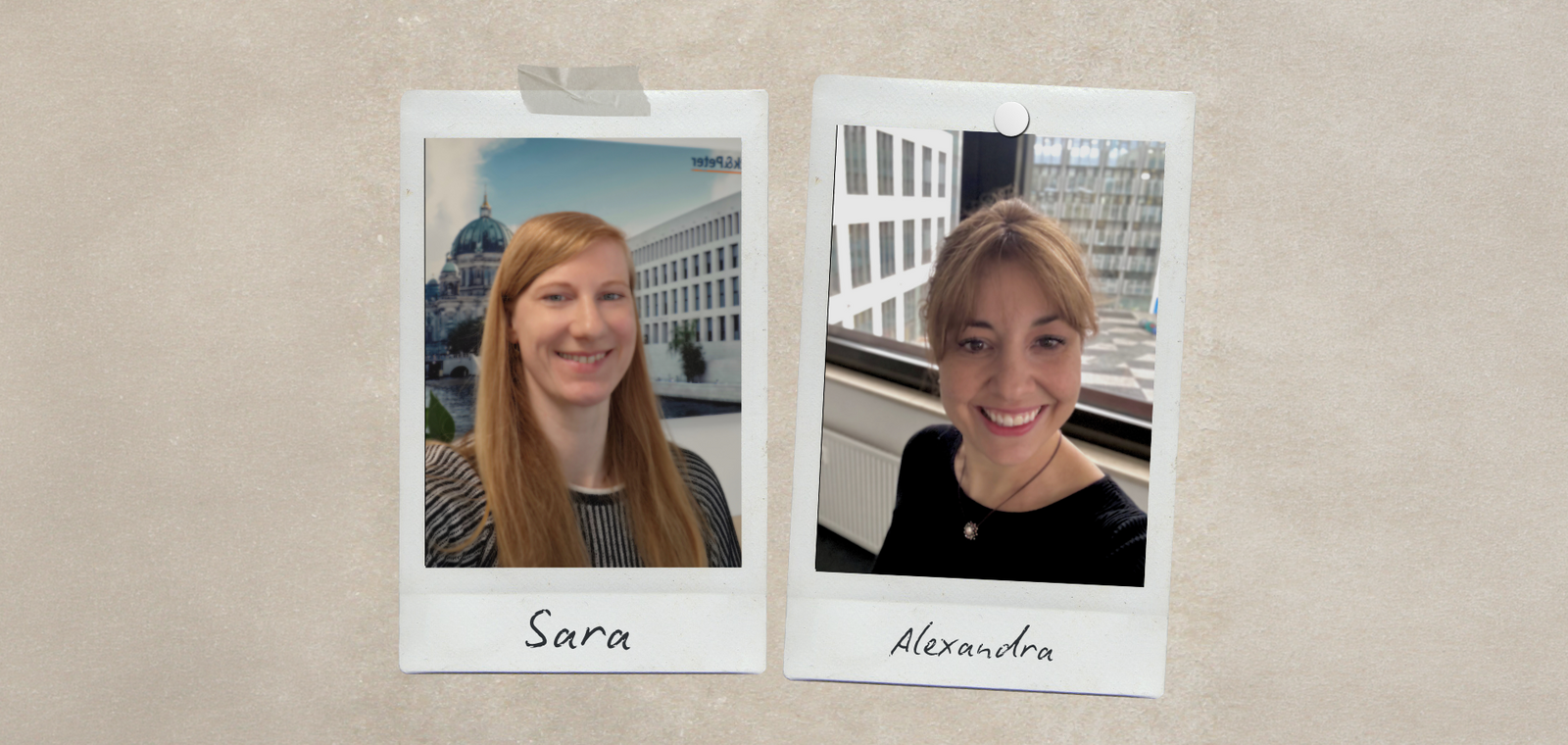
On International Women's Day, Sara Körner (Giessen branch) and Alexandra Sonnleitner (Regensburg branch) talk about what modern leadership means at Kieback&Peter. Although many miles separate their locations, they share common perspectives: a conversation about trust, “guidelines” in everyday life, and the realization that you don't have to be “finished” before you can take on responsibility.
Hello Sara, hello Alexandra! Thank you for taking the time to talk to us.
If you had to describe both of you as branch managers in one sentence each, what would that sentence be?
Sara: If I had to describe myself, I would say I am open-minded, transparent, and consistent, with the goal of involving the team and providing clear leadership.
Alexandra: And for me, it would probably be: always approachable, flexible, and right in the thick of things—whether it's small everyday issues or the development of our location.
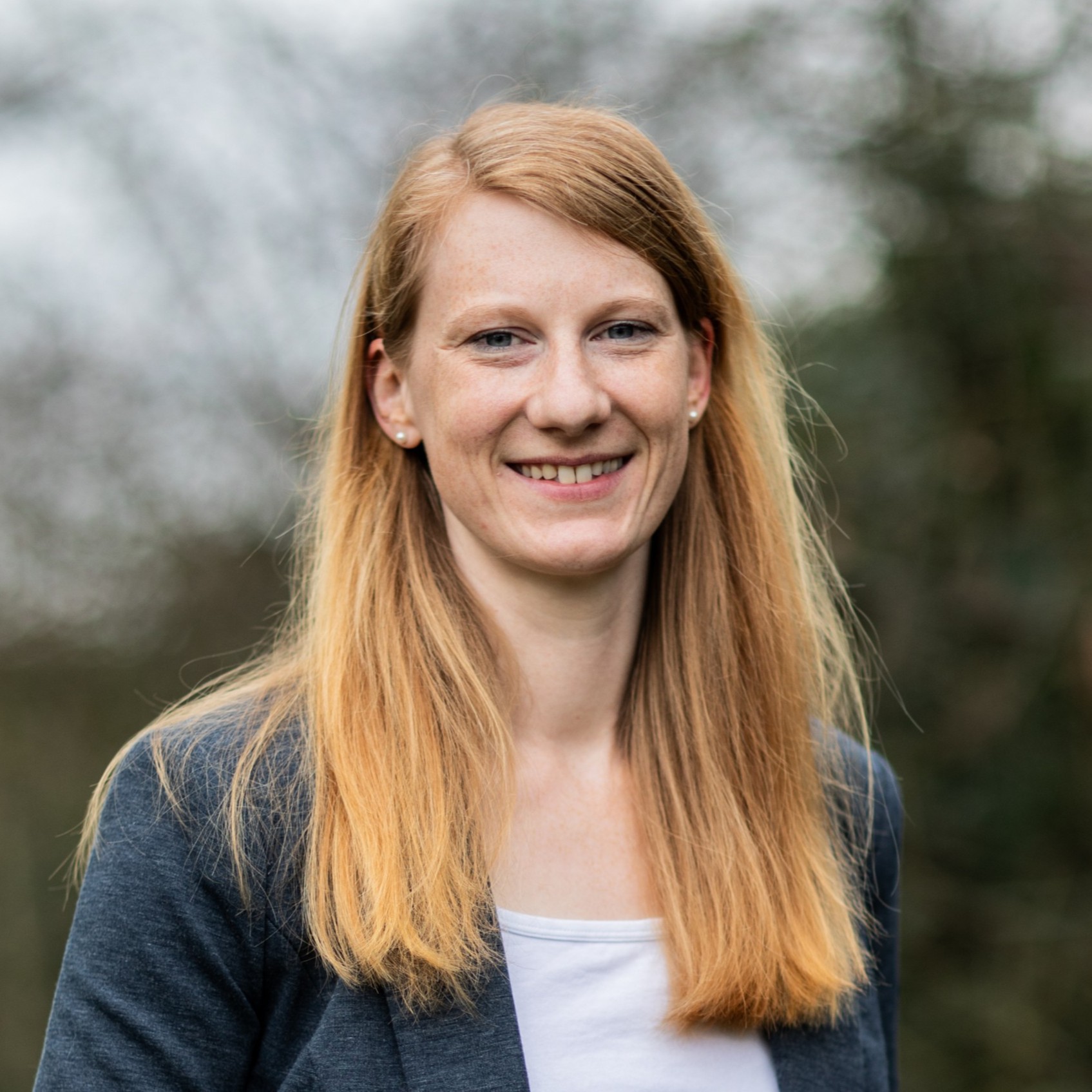
I understand good leadership to mean that guidelines provide orientation, trust enables individual action, and support is available when needed.
What does good leadership mean to you in everyday life?
Alexandra: For me, good leadership means being dispensable. Above all, it's a question of inner attitude: developing people and teams so that they become independent and have a real impact.
Sara: I see it similarly. I understand good leadership to mean that guidelines provide orientation, trust enables individual action, and support is available when needed.
In your opinion, which perspective(s) are particularly important in leadership?
Alexandra: It is important to me that everyone understands how their respective tasks contribute to something bigger—for our location, for our team, and for the entire company.
Sara: For me, it is particularly important to see the individual strengths of each person, to create equality and appreciation within the team, and—as Alexandra so beautifully put it—to convey the importance of each individual role. Every cog is important!
Where do we as an industry need to rethink our approach in order to remain truly sustainable?
Sara: For me, this primarily means moving away from rigid structures and establishing flexible, agile processes instead. In doing so, it is important to me to actively promote creativity and innovation and to foster an open feedback culture.
Alexandra: In addition, we can only stay ahead if we take technology and people equally seriously. Modern solutions are of little use if we do not also offer modern working conditions and development prospects.
As branch managers, you are responsible for people, projects, and results. What are you particularly proud of in your role?
Alexandra: Being part of a team that is growing, successful, and sticks together even when things get tough in day-to-day business—and tackles challenges together.
Sara: I can certainly confirm that. I am extremely proud of my team, which has demonstrated over the past year how well we can master projects together through teamwork, even in difficult times, and how much we have grown together in recent years.
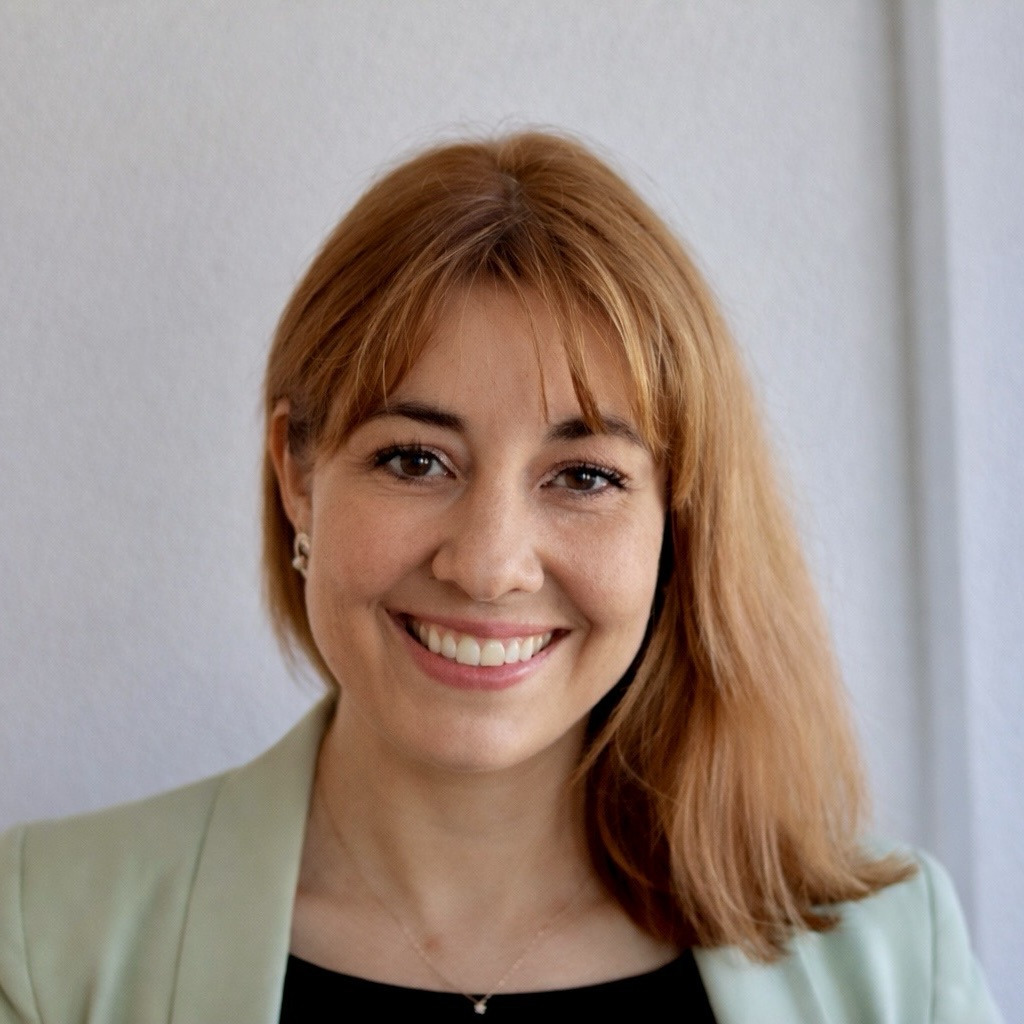
I wish I had known earlier that you don't have to be “ready” to take on responsibility—you grow into it step by step.
Many young people today are looking for guidance in their professional lives. What would you have liked to know earlier about leadership or responsibility?
Alexandra: There are actually a few things.😊 I wish I had known earlier that you don't have to be “ready” to take on responsibility—you grow into it step by step. Responsibility doesn't mean always having everything under control, but making decisions and standing by them.
Sara: Exactly, that's an important point. I wish I had realized earlier that leadership doesn't mean having to control everything or always having a ready-made solution at hand. The key is to build trust, provide guidance, and thereby strengthen the team and share responsibility.
Alexandra: In the end, I learned that good leadership has less to do with perfect answers and much more to do with asking good questions and listening attentively.
When we look back at Kieback&Peter and our branches in five years' time, what do you think should have developed further—technically or culturally?
Sara: I hope that we continue to strengthen our networking so that we can utilize existing skills even more quickly and effectively. At the same time, I hope for a culture in which change is seen as an opportunity rather than viewed critically.
Alexandra: Professionally, we must always remain adaptable.
Culturally, I would like to see diverse teams—including in leadership positions—become the norm, without needing to be explained, and understood as a strength. This also makes us credible and attractive to young people.